

Is There A Registered Sex Offender List
Sex offender registries in the United States exist at both the federal and country levels. Registries contain data almost persons convicted of sexual offenses for police force enforcement and public notification purposes. All 50 states and the Commune of Columbia maintain sex offender registries that are open to the public via websites, although information on some offenders is visible to law enforcement only. Public disclosure of offender information varies between the states depending on offenders designated tier, which may besides vary from land to land, or risk assessment result. Co-ordinate to NCMEC, as of 2016 at that place were 859,500 registered sex activity offenders in U.s..[1]
The majority of states and the federal government apply systems based on confidence offenses only, where registration requirement is triggered equally a outcome of finding of guilt, or pleading guilty, to a sexual practice law-breaking regardless of the actual gravity of the criminal offence. The trial judge typically can not practice judicial discretion with respect to registration.[two] [ neutrality is disputed] Depending on jurisdiction, offenses requiring registration range in their severity from public urination or boyish sexual experimentation with peers, to violent sexual practice offenses. In some states offenses such every bit unlawful imprisonment may require sex offender registration.[3] According to Human being Rights Spotter, children as young as ix have been placed on the registry;[4] [5] juvenile offenders business relationship for 25 percent of registrants.[half dozen] In some states, the length of the registration menstruum is determined by the law-breaking or assessed risk level; in others all registration is for life.[7] Some states allow removal from the registry nether certain specific, limited circumstances.[seven] Information of juvenile offenders are withheld for law enforcement merely may be made public after their 18th birthday.[8]
Sexual practice Offender Registration and Notification (SORN) has been studied for its impact on the rates of sexual offense recidivism, with the bulk of studies demonstrating no touch.[9] The Supreme Court of the The states has upheld sex activity offender registration laws both times such laws accept been examined by them. Several challenges on parts of state level legislation have been honored by the courts. Legal scholars have challenged the rationale behind the Supreme Court rulings. Perceived problems in legislation has prompted organizations such as NARSOL, ACSOL and ACLU among others, to promote for reform.
History [edit]
In 1947, California became the start state in the United states of america to have a sex offender registration program.[10] In 1990, Washington state began community notification of its well-nigh dangerous sex offenders, making it the first land to ever brand whatever sex offender information publicly available. Prior to 1994, only a few states required bedevilled sex offenders to register their addresses with local law enforcement. The 1990s saw the emergence of several cases of brutal violent sexual offenses against children. Heinous crimes like those of Westley Allan Dodd, Earl Kenneth Shriner and Jesse Timmendequas were highly publicized. As a result, public policies began to focus on protecting public from stranger danger.[xi] Since the early 1990s, several state and federal laws, often named after victims, accept been enacted as a response to public outrage generated by highly publicized, but statistically very rare,[12] violent predatory sexual activity crimes against children by strangers.[eleven]
Based on a 2003 report, prisoners convicted of rape or sexual assault who were released in 1994 were four times more likely to be arrested for a sex offense within three years of prison release than non-sexual offenders released inside the same year. The boilerplate sentencing for imprisoned sexual activity offenders was eight years and offenders served less than one-half that period in prison. In the same 2003 study, of 9,700 released sex offenders, 4,300 had been convicted of child molestation and virtually of those were convicted for molesting a child nether the age of xiii. Almost one-half of those imprisoned for child-victim cases, offended against their own child or other relative. Within the three year followup on the 1994 report, 3.five percent of released rapists and sexual assaulters were bedevilled for another sex crime. 43 percentage of sex offenders had been re-arrested for whatever reason versus 68 percent re-arrest rate of non-sex offenders. Recidivism studies typically find that the older the prisoner when released, the lower the rate of backsliding.[13]
In one written report of 561 clinically diagnosed pedophiles "who targeted young boys exterior the home committed the greatest number of crimes with an boilerplate of 281.7 acts with an average of 150.2 partners".[14] Only about a tertiary of vehement rapes are reported and sex activity crimes are widely believed to be the most underreported of all criminal offenses, with a reporting charge per unit of barely a tertiary of such offenses. Under polygraph, many apprehended sex activity offenders indicated that most of their offenses were non reported.[fifteen] In an effort to protect the citizenry, local, state and federal lawmakers responded to these issues through a variety of legislative enactments.
Jacob Wetterling Act of 1994 [edit]
In 1989, an 11-year-erstwhile boy, Jacob Wetterling, was abducted from a street in St. Joseph, Minnesota. His whereabouts remained unknown for nearly 27 years until remains were discovered simply exterior Paynesville, Minnesota in 2016. Jacob's mother, Patty Wetterling, current chair of National Center for Missing and Exploited Children, led a community attempt to implement a sex offender registration requirement in Minnesota and, subsequently, nationally. In 1994, Congress passed the Jacob Wetterling Crimes Against Children and Sexually Vehement Offender Registration Human action. If states failed to comply, united states of america would forfeit 10% of federal funds from the Omnibus Crime Control and Safe Streets Act.[ neutrality is disputed] The deed required each state to create a registry of offenders convicted of qualifying sex offenses and certain other offenses against children and to track offenders by confirming their identify of residence annually for x years afterwards their release into the community or quarterly for the residuum of their lives if the sexual practice offender was convicted of a fierce sex offense. States had a certain time menstruum to enact the legislation, along with guidelines established by the Chaser Full general.[11] [ further explanation needed ] The registration information collected was treated as private data viewable past law enforcement personnel only, although law enforcement agencies were allowed to release relevant information that was deemed necessary to protect the public apropos a specific person required to annals.[16] Some other loftier-contour case, abuse and murder of Megan Kanka led to modification of Jacob Wetterling Deed.[11] The subsequent laws forcing changes to the sexual activity offenders registries in all 50 states have since troubled Patty Wetterling and she has been vocal nearly her opposition to including children on the registry as well every bit assuasive full access to the public. In an interview with reporter Madeleine Baran Wetterling stated, "No more victims, that'south the goal. Just we let our emotions run away from achieving that goal." In lamenting how nosotros treat sex offenders she stated, "Y'all're screwed. You lot will not get a job you volition not find housing. This is on your tape forever, expert luck." She believes that by not allowing sex offenders who have served their fourth dimension to reintegrate to guild we do more than harm than practiced, "I've turned 180 from where I was." [17]
Megan's Constabulary of 1996 [edit]

In 1994, 7-yr-onetime Megan Kanka from Hamilton Township, Mercer Canton, New Jersey was raped and killed by a recidivist pedophile. Jesse Timmenquas, who had been convicted of two previous sexual practice crimes against children, lured Megan in his business firm and raped and killed her. Megan'south female parent, Maureen Kanka, started to antechamber to change the laws, arguing that registration established by the Wetterling Act, was insufficient for customs protection. Maureen Kanka's goal was to mandate community notification, which under the Wetterling Act had been at the discretion of police enforcement. She said that if she had known that a sex offender lived across the street, Megan would however be alive. In 1994, New Jersey enacted Megan's Law. In 1996, President Bill Clinton enacted a federal version of Megan's Law, as an subpoena to the Jacob Wetterling Act. The amendment required all states to implement Registration and Community Notification Laws by the end of 1997. Prior to Megan's expiry, only 5 states had laws requiring sexual activity offenders to register their personal data with police enforcement. On August five, 1996 Massachusetts was the terminal state to enact its version of Megan'southward Law.[11]
Adam Walsh Act of 2006 [edit]
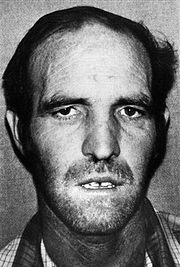
Ottis Toole; bear witness indicated he killed Adam Walsh, and he confessed only then recanted.
The most comprehensive legislation related to the supervision and management of sexual practice offenders is the Adam Walsh Act (AWA), named after Adam Walsh, who was kidnapped from a Florida shopping mall and killed in 1981, when he was 6 years quondam. The AWA was signed on the 25th anniversary of his abduction; efforts to establish a national registry was led by John Walsh, Adam's male parent.
One of the significant component of the AWA is the Sex Offender Registration and Notification Human action (SORNA). SORNA provides uniform minimum guidelines for registration of sexual practice offenders, regardless of the state they alive in. SORNA requires states to widen the number of covered offenses and to include certain classes of juvenile offenders. Prior to SORNA, states were granted breadth in the methods to differentiate offender management levels. Whereas many states had adopted to utilize structured adventure cess tools classification to distinguish "loftier take a chance" from "low risk" individuals, SORNA mandates such distinctions to exist made solely on the basis of the governing offense.[xviii] States are immune, and often practice, exceed the minimum requirements. Scholars accept warned that classification system required under Adam Walsh Act is less sophisticated than risk-based approach previously adopted in certain states.[two] [xi] [19]
Extension in number of covered offenses and making the amendments apply retroactively under SORNA requirements expanded the registries by as much as 500% in some states.[xx] All states were required to comply with SORNA minimum guidelines by July 2009 or risk losing 10% of their funding through the Byrne programme.[11] [ neutrality is disputed] As of April 2014, the Justice Department reports that only 17 states, 3 territories and 63 tribes had substantially implemented requirements of the Adam Walsh Human action.[21]
Registration [edit]
Sex offenders must periodically written report in person to their local law enforcement agency and replenish their address, and list of other information such as place of employment and email addresses. The offenders are photographed and fingerprinted by law enforcement, and in some cases DNA information is as well nerveless. Registration period depends on the classification level and the police of the governing jurisdiction.
Nomenclature of offenders [edit]
States utilise varied methods of classifying registrants. Identical offenses committed in different states may produce different outcomes in terms of public disclosure and registration menstruation. An offender classified as level/tier I offender in 1 state, with no public notification requirement, might exist classified as tier Ii or tier III offender in another. Sources of variation are diverse, but may be viewed over three dimensions — how classes of registrants are distinguished from one another, the criteria used in the nomenclature process, and the processes applied in nomenclature decisions.[2]
The first point of deviation is how states distinguish their registrants. At one end are the states operating unmarried-tier systems that treat registrants equally with respect to reporting, registration duration, notification, and related factors. Alternatively, some states utilise multi-tier systems, commonly with two or iii categories that are supposed to reflect presumed public rubber risk and, in turn, required levels of attention from law enforcement and the public. Depending on state, registration and notification systems may have special provisions for juveniles, habitual offenders or those deemed "sexual predators" past virtue of certain standards.[two]
The second dimension is the criteria employed in the classification decision. States running criminal offence-based systems utilize the conviction offense or the number of prior offenses every bit the criteria for tier consignment. Other jurisdictions apply diverse run a risk assessments that consider factors that scientific inquiry has linked to sexual backsliding risk, such equally age, number of prior sexual practice offenses, victim gender, relationship to the victim, and indicators of psychopathy and deviant sexual arousal. Finally, some states use a hybrid of offense-based and take a chance-assessment-based systems for classification. For example, Colorado law requires minimum terms of registration based on the conviction crime for which the registrant was convicted or adjudicated but also uses a risk assessment for identifying sexually violent predators — a limited population deemed to be dangerous and subject to more extensive requirements.[2]
Tertiary, states distinguishing among registrants employ differing systems and processes in establishing tier designations. In full general, offense-based classification systems are used for their simplicity and uniformity. They let classification decisions to exist made via administrative or judicial processes. Risk-cess-based systems, which employ actuarial risk assessment instruments and in some cases clinical assessments, require more than of personnel involvement in the process. Some states, similar Massachusetts and Colorado, utilize multidisciplinary review boards or judicial discretion to constitute registrant tiers or sexual predator status.[2]
In some states, such as Kentucky, Florida, and Illinois, all sex offenders who motion into the state and are required to register in their previous home states are required to annals for life, regardless of their registration catamenia in previous residence.[22] Illinois reclassifies all registrants moving in equally a "Sexual Predator".
Public notification [edit]
States apply differing sets of criteria to decide which registration information is available to the public. In a few states, a judge determines the take a chance level of the offender, or scientific risk assessment tools are used; information on depression-take chances offenders may be available to police force enforcement only. In other states, all sex offenders are treated equally, and all registration data is available to the public on a state Internet site. Information of juvenile offenders are withheld for law enforcement simply may exist made public after their 18th birthday.[8]
Under federal SORNA, simply tier I registrants may be excluded from public disclosure, with exemption of those convicted of "specified criminal offence confronting a small-scale."[23] Since SORNA merely sets the minimum gear up of rules the states must follow, many SORNA compliant states have opted to disembalm information of all tiers.[seven]
Disparities in state legislation have caused some registrants moving across land lines becoming subject field to public disclosure and longer registration periods under the destination state's laws.[24] These disparities have as well prompted some registrants to move from one state to another in order to avoid stricter rules of their original land.[25]
Exclusion zones [edit]
| External paradigm | |
|---|---|
 City wide map of exclusion zones in Milwaukee prior to September 23, 2017. Ruby and orange highlights denoted the areas where certain registered sex offenders could non reside inside the city[26] [27]] City wide map of exclusion zones in Milwaukee prior to September 23, 2017. Ruby and orange highlights denoted the areas where certain registered sex offenders could non reside inside the city[26] [27]] |
Laws restricting where registered sex activity offenders may alive or work accept go increasingly mutual since 2005.[28] [29] At to the lowest degree 30 states accept enacted statewide residency restrictions prohibiting registrants from living within certain distances of schools, parks, day-cares, schoolhouse charabanc stops, or other places where children may congregate.[30] Distance requirements range from 500 to 2,500 feet (150 to 760 thousand), but most get-go at to the lowest degree ane,000 ft (300 m) from designated boundaries. In addition, hundreds of counties and municipalities take passed local ordinances exceeding the state requirements,[xxx] [31] and some local communities accept created exclusion zones effectually churches, pet stores, movie theaters, libraries, playgrounds, tourist attractions or other "recreational facilities" such as stadiums, airports, auditoriums, swimming pools, skating rinks and gymnasiums, regardless of whether publicly or privately endemic.[31] [32] Although restrictions are tied to distances from areas where children may congregate, most states apply exclusion zones to offenders even though their crimes did not involve children.[32] [33] In a 2007 report, Human Rights Watch identified only four states limiting restrictions to those convicted of sex crimes involving minors. The report also found that laws preclude registrants from homeless shelters within restriction areas.[31] In 2005, some localities in Florida banned sex offenders from public hurricane shelters during 2005 Atlantic hurricane season.[32] In 2007, Tampa, Florida's metropolis quango considered banning registrants from moving in the city.[34]
Restrictions may effectively cover entire cities, leaving small "pockets" of immune places of residency. Residency restrictions in California in 2006 covered more than 97% of rental housing area in San Diego County.[35] In an attempt to blackball registrants from living in communities, localities have built small "pocket parks" to drive registrants out of the area.[36] [37] [38] In 2007, journalists reported that registered sex offenders were living under the Julia Tuttle Causeway in Miami, Florida considering the state laws and Miami-Dade Canton ordinances banned them from living elsewhere.[39] [twoscore] Encampment of 140 registrants is known equally Julia Tuttle Causeway sex activity offender colony.[41] [42] The colony generated international coverage and criticism around the country.[42] [43] The colony was disbanded in 2010 when the metropolis found acceptable housing in the area for the registrants, just reports five years afterwards indicated that some registrants were still living on streets or alongside railroad tracks.[42] [44] As of 2013 Suffolk County, New York, was faced with a situation where 40 sex offenders were living in two cramped trailers, which were regularly moved betwixt isolated locations around the county by the officials, due to local living restrictions.[45] [46]
Effectiveness [edit]
Prove to support the effectiveness of public sexual practice offender registries is limited and mixed.[47] Majority of inquiry results practise non detect statistically significant shift in sexual offense trends post-obit the implementation of sexual practice offender registration and notification (SORN) regimes.[48] [49] [50] [51] A few studies signal that sexual recidivism may have been lowered by SORN policies,[52] [53] while a few take found statistically pregnant increment in sex crimes following SORN implementation.[47] [54] According to the Function of Justice Programs' SMART Part, sexual practice offender registration and notification requirements arguably have been implemented in the absenteeism of empirical testify regarding their effectiveness.[47]
According to SMART Function, there is no empirical support for the effectiveness of residence restrictions. In fact, a number of negative unintended consequences have been empirically identified that may aggravate rather than mitigate offender take chances.[47]
Debate [edit]
According to a 2007 study, the majority of the full general public perceives sex offender recidivism to be very high and views offenders as a homogeneous group regarding that adventure. Consequently, the study establish that a majority of the public endorses broad community notification and related policies.[55] Proponents of the public registries and residency restrictions believe them to be useful tools to protect themselves and their children from sexual victimization.[55] [56]
Critics of the laws point to the lack of testify to back up the effectiveness of sex offender registration policies. They call the laws too harsh and unfair for adversely affecting the lives of registrants decades afterwards completing their initial sentence, and for affecting their families as well. Critics say that registries are overly broad equally they reach to non-fierce offenses, such as sexting or consensual teen sex, and fail to distinguish those who are not a danger to society from predatory offenders.[57] [58] [59]
Former Supervisory Special Agent of the FBI Kenneth V. Lanning argues that registration should exist offender-based instead of criminal offense-based: "A sex-offender registry that does not distinguish betwixt the total pattern of behavior of a 50-year-old man who violently raped a 6-year-former daughter and an eighteen-year-one-time boy who had 'compliant' sexual intercourse with his girlfriend a few weeks prior to her 16th altogether is misguided. The offense an offender is technically found or pleads guilty to may not truly reflect his dangerousness and risk level".[xiv]
Some lawmakers recognize bug in the laws. However, they are reluctant to aim for reforms considering of political opposition and being viewed every bit lessening the kid prophylactic laws.[60]
These perceived problems in legislation have prompted a growing grass-roots movement to reform sex offender laws in the United States.
Constitutionality [edit]
Sex offender registration and community notification laws accept been challenged on a number of ramble and other bases, generating substantial corporeality of instance law. Those challenging the statutes take claimed violations of ex postal service facto, due procedure, cruel and unusual punishment, equal protection and search and seizure.[11] The Supreme Courtroom of the U.s. has upheld the laws. In 2002, in Connecticut Dept. of Public Rubber v. Doe the U.Due south. Supreme Courtroom affirmed public disclosure of sex offender information and in 2003, in Smith 5. Doe, the Supreme Court upheld Alaska's registration statute, reasoning that sex offender registration is ceremonious measure reasonably designed to protect public safety, not a penalization, which can be practical ex post facto. However, law scholars debate that fifty-fifty if the registration schemes were initially ramble they have, in their current course, become unconstitutionally burdensome and unmoored from their constitutional grounds. A report published in autumn 2015 constitute that statistics cited by Justice Anthony Kennedy in two U.Southward. Supreme Court cases ordinarily cited in decisions upholding constitutionality of sexual activity offender policies were unfounded.[61] [62] [63] Several challenges to state level sex offender laws accept been honored after hearing at the state level. However, in 2017 the Pennsylvania Supreme Courtroom determined that SORNA violates ex post facto when retroactively applied.[64] [65]
In September 2017 federal approximate establish that Colorado registry is unconstitutional barbarous and unusual penalization equally practical to iii plaintiffs.[66]
Impact on registrants and their families [edit]
Sex activity offender registration and community notification (SORN) laws carry costs in the grade of collateral consequences for both sex offenders and their families, including difficulties in relationships and maintaining employment, public recognition, harassment, attacks, difficulties finding and maintaining suitable housing, equally well as an inability to take role in expected parental duties, such equally going to schoolhouse functions.[67] [68] Negative furnishings of collateral consequences on offenders are expected to contribute to known gamble factors, and to offenders failing to register, and to the related potential for re-offending.[69]
Registration and notification laws touch non only sex offenders, just as well their loved ones. Laws may force families to live apart from each other, considering of family rubber issues caused by neighbors, or considering of residency restrictions. Family members often experience isolation, hopelessness and depression.[48] U.Due south. federal police force prohibits anyone who is required to register as a sex offender in whatever state from participating in the Housing Pick Voucher Program (Section 8) or any like federal housing programs, such as public housing.
Come across as well [edit]
- American sex offenders
- Child sexual abuse
- Circles of Support and Accountability
- Miracle Village
- Debauchee Park
- Sarah's Police force
- United States Center for SafeSport
References [edit]
-
 This article incorporates public domain material from websites or documents of the United States Department of Justice.
- ^ "Map of Registered Sexual activity Offenders in the The states" (PDF). National Center for Missing and Exploited Children. Archived from the original (PDF) on 2017-07-17. Retrieved 2016-01-07 .
- ^ a b c d e f Harris, A. J.; Lobanov-Rostovsky, C.; Levenson, J. Southward. (ii April 2010). "Widening the Net: The Effects of Transitioning to the Adam Walsh Act's Federally Mandated Sexual practice Offender Nomenclature Organization" (PDF). Criminal Justice and Beliefs. 37 (5): 503–519. doi:10.1177/0093854810363889. S2CID 55988358. Archived from the original (PDF) on xxx September 2015.
- ^ "Courtroom keeps homo on sex activity offender list but says 'troubling'". Toledo News. 28 March 2015. Archived from the original on 2 April 2015.
- ^ Raised on the Registry: The Irreparable Impairment of Placing Children on Sexual practice Offender Registries in the US (2012) Human Rights Sentinel ISBN 978-one-62313-0084
- ^ "When Kids Are Sex activity Offenders". Boston Review. twenty September 2013.
- ^ Lehrer, Eli (7 September 2015). "A Senseless Policy - Take kids off the sex-offender registries". The Weekly Standard . Retrieved 1 September 2015.
- ^ a b c "Megan's Police by State". Klaas Kids Foundation. 2014-04-14. Retrieved 2015-08-21 .
- ^ a b "How exercise Registration Laws Apply to Juvenile Offenders in Different States?". Center for Sex activity Offender Direction.
- ^ "Adult Sex activity Offender Management" (PDF). U.S. Department of Justice. p. three.
- ^ "California Megan's Law – California Department of Justice – Part of the Attorney General". Archived from the original on 2015-11-04.
- ^ a b c d e f one thousand h Wright, Ph.D Richard One thousand. (2014). Sex offender laws : failed policies, new directions (Second ed.). Springer Publishing Co Inc. pp. 50–65. ISBN9780826196712.
- ^ Lancaster, Roger (twenty February 2013). "Panic Leads to Bad Policy on Sex Offenders". The New York Times . Retrieved 26 November 2014.
- ^ "v Percent of Sex Offenders Rearrested for another Sex Offense inside three Years of Prison Release". Bureau of Justice Statistics. November sixteen, 2003. Retrieved October 25, 2015.
- ^ a b "Child Molesters: A Behavioral Analysis" (PDF). National Eye for Missing and Exploited Children. p. 15. Retrieved Oct 25, 2015.
- ^ "Sex Offenders Myths and Facts". New York State Partitioning of Criminal Justice Services. Apr 2014. Retrieved October 25, 2015.
- ^ "Tearing Crime Command and Police Enforcement Act of 1994" (PDF). 1 Hundred Tertiary Congress of the Usa of America. 1995. pp. 246–247.
- ^ Madeleine Baran (October 3, 2016). "In the dark" (Podcast). American Public Media.
- ^ Harris, A. J.; Lobanov-Rostovsky, C. (22 September 2009). "Implementing the Adam Walsh Act's Sex Offender Registration and Notification Provisions: A Survey of the States". Criminal Justice Policy Review. 21 (2): 202–222. doi:10.1177/0887403409346118. S2CID 144231914.
- ^ O'Hear, Michael M. (2008). "Perpetual Panic". Federal Sentencing Reporter. 21 (one): 69–77. doi:10.1525/fsr.2008.21.2.69.
- ^ Grinberg, Emanuella (28 July 2011). "5 years later, states struggle to comply with federal sex activity offender law". CNN.
- ^ "Adam Walsh Child Protection and Safety Act Compliance News". National Conference of State Legislatures.
- ^ "Frequently".
- ^ "Registry Requirement FAQs". Role of Sex Offender Sentencing, Monitoring, Apprehending. Retrieved iv December 2015.
- ^ Daley, Ken (21 Apr 2015). "Alabama sex offender files suit challenging Louisiana registry laws in federal court". The Times-Picayune. Archived from the original on half dozen July 2015.
- ^ "Portland: Sex activity offender magnet?". Portland Tribune. xiv February 2013.
- ^ "Sexual activity Offender Ordinance". city.milwaukee.gov. Archived from the original on 2017-xi-08.
- ^ "Milwaukee Common Council votes to lift sex offender residency restrictions". Milwaukee Journal Watch. 6 September 2017.
- ^ Zandbergen, P. A.; Levenson, J. S.; Hart, T. C. (ii Apr 2010). "Residential Proximity to Schools and Daycares: An Empirical Analysis of Sex Crime Recidivism". Criminal Justice and Behavior. 37 (five): 482–502. doi:x.1177/0093854810363549. S2CID 56267056.
- ^ Levenson, Jill; Zgoba, Kristen; Tewksbury, Richard (2007). "Sex Offender Residence Restrictions: Sensible Policy or Flawed Logic?". Federal Probation. 71 (3): ii.
- ^ a b Levenson, J. S. (1 April 2005). "The Touch on of Sex Offender Residence Restrictions: one,000 Feet From Danger or One Stride From Cool?" (PDF). International Periodical of Offender Therapy and Comparative Criminology. 49 (2): 168–178. CiteSeerX10.ane.1.489.5943. doi:10.1177/0306624X04271304. PMID 15746268. S2CID 42407834.
- ^ a b c "No Easy Answers: Sex Offender Laws in the US". Human Right Watch. eleven September 2007.
- ^ a b c Yung, Corey R. (January 2007). "Banishment By a Thousand Laws: Residency Restrictions on Sexual activity Offenders". Washington University Law Review. 85: 101.
- ^ "Department 7.24 RESTRICTIONS ON REGISTERED SEX OFFENDERS". City of Malden. Retrieved half dozen October 2015.
- ^ "Tampa wants to keep sex offenders outside metropolis limits". Tampa Bay Times. xix Jan 2007.
- ^ Keegan, Kyle; Saavedra, Tony (2 March 2015). "State Supreme Court overturns sex offender housing rules in San Diego; law could bear on Orange County, beyond". The Orange County Annals.
- ^ Suter, Leanne (xv March 2013). "'Pocket parks' leave sex offenders questioning where to live". ABC7.
- ^ Lovett, Ian (9 March 2013). "Neighborhoods Seek to Banish Sex Offenders by Building Parks". The New York Times.
- ^ Jennings, Angel (28 February 2013). "50.A. sees parks equally a weapon confronting sex offenders". Los Angeles Times.
- ^ "Florida housing sexual activity offenders under bridge". CNN. half dozen Apr 2007.
- ^ "Laws to Runway Sex Offenders Encouraging Homelessness". The Washington Post. 27 December 2008.
- ^ Samuels, Robert (27 July 2010). "Sex offenders seek housing subsequently closing of army camp under the Julia Tuttle Causeway". The Sun-Sentinel.
- ^ a b c "From Julia Tuttle span to Shorecrest street corner: Miami sex offenders again living on street". Palm Beach Post. 12 March 2012.
- ^ Häntzschel, Jörg (17 May 2010). "USA: Umgang mit Sexualstraftätern - Verdammt in alle Ewigkeit". Süddeutsche Zeitung.
- ^ "Miami Sexual activity Offenders Alive on Railroad train Tracks Thanks to Callous Restrictions". Broward Palm Beach New Times. 13 March 2014.
- ^ Michael Schwirtz (4 February 2013). "In two Trailers, the Neighbors Nobody Wants". The New York Times . Retrieved 5 February 2013.
- ^ Corey Kilgannon (17 February 2007). "Suffolk County to Keep Sex Offenders on the Move". The New York Times . Retrieved v February 2013.
Now officials of this county on Long Island say they have a solution: putting sex offenders in trailers to be moved regularly around the county, parked for several weeks at a fourth dimension on public state away from residential areas and enforcing potent curfews.
- ^ a b c d Office of Justice Programs (2012). "Chapter 8: Sex Offender Management Strategies". Office of Justice Programs - Sexual activity Offender Management and Planning Initiative (SOMAPI).
- ^ a b Levenson, Jill; Tewksbury, Richard (15 January 2009). "Collateral Impairment: Family Members of Registered Sex activity Offenders" (PDF). American Periodical of Criminal Justice. 34 (1–two): 54–68. CiteSeerX10.one.1.615.3651. doi:10.1007/s12103-008-9055-x. S2CID 146412299.
- ^ Vasquez, B. E.; Maddan, S.; Walker, J. T. (26 Oct 2007). "The Influence of Sexual activity Offender Registration and Notification Laws in the United States: A Time-Series Analysis". Law-breaking & Malversation. 54 (two): 175–192. doi:ten.1177/0011128707311641. S2CID 53318656.
- ^ Zevitz, Richard Grand. (June 2006). "Sexual practice Offender Community Notification: Its Role in Recidivism and Offender Reintegration". Criminal Justice Studies. xix (ii): 193–208. doi:10.1080/14786010600764567. S2CID 144828566.
- ^ Prescott, J.J.; Rockoff, Jonah E. (February 2011). "Do Sexual practice Offender Registration and Notification Laws Bear upon Criminal Beliefs?". Journal of Law and Economic science. 54 (one): 161–206. CiteSeerX10.1.1.363.1170. doi:ten.1086/658485. S2CID 1672265.
- ^ DUWE, GRANT; DONNAY, WILLIAM (May 2008). "The Touch of Megan's Law on Sex Offender Recidivism: The Minnesota Experience". Criminology. 46 (2): 411–446. doi:ten.1111/j.1745-9125.2008.00114.10.
- ^ "Sex offender sentencing in Washington Land: Has community notification reduced backsliding?". Washington State Plant for Public Policy. December 2005.
- ^ "Studies question effectiveness of sex offender laws". Science Daily. 30 August 2011.
- ^ a b Levenson, Jill Due south.; Brannon, Yolanda N.; Fortney, Timothy; Bakery, Juanita (12 April 2007). "Public Perceptions About Sex Offenders and Community Protection Policies" (PDF). Analyses of Social Bug and Public Policy. 7 (1): 6. doi:10.1111/j.1530-2415.2007.00119.x.
- ^ Anderson, A. 50.; Sample, L. L. (four April 2008). "Public Awareness and Action Resulting From Sexual activity Offender Community Notification Laws". Criminal Justice Policy Review. xix (4): 371–396. CiteSeerX10.1.1.544.7814. doi:x.1177/0887403408316705. S2CID 145080393.
- ^ "Teenager's Jailing Brings a Call to Prepare Sex Offender Registries". The New York Times. iv July 2015.
- ^ "The Today Show Weighs In on Our "Accidental Sexual practice Offender" Story". Marie Claire . Retrieved 5 January 2016.
- ^ "National briefing aims to soften, reform sex offender laws". KOAT Albuquerque. 29 August 2012.
- ^ http://www.tampabay.com/news/politics/stateroundup/5-years-after-jessica-lunsfords-killing-legislators-rethink-sex/1075251 [ dead link ]
- ^ Ellman, Ira M.; Ellman, Tara (sixteen September 2015). "'Frightening and High': The Supreme Courtroom's Crucial Mistake About Sex Criminal offense Statistics" (PDF). Forthcoming, Constitutional Commentary, During Fall, 2015.
- ^ "How a dubious statistic convinced U.S. courts to approve of indefinite detention". The Washington Mail. twenty August 2015.
- ^ "Matthew T. Mangino: Supreme Court perpetuates sexual activity offender myths". Milford Daily News. 4 September 2015.
- ^ "[J-121B-2016oajc] IN THE SUPREME COURT OF PENNSYLVANIA" (PDF). Supreme Court of Pennsylvania. Retrieved 19 July 2017.
- ^ "Registered Sexual practice Offenders May Shorten Registration Period According to PA Supreme Courtroom". 20 July 2017.
- ^ "Federal judge rules Colorado sex activity offender register unconstitutional". Reuters. 2017.
- ^ Tewksbury, Richard; Jennings, Weley M; Zgoba, Kristen. "Sex activity offenders: Recidivism Collateral Consequences" (PDF). National Criminal Justice Reference Service.
- ^ "COLORADO SEX OFFENDER REGISTRATION FORM" (PDF). Colorado Bureau of Investigation.
- ^ Levenson, Jill; Letourneau, Elizabeth; Armstrong, Kevin; Zgoba, Kristen Marie (June 2010). "Failure to Annals as a Sex activity Offender: Is it Associated with Recidivism?". Justice Quarterly. 27 (three): 305–331. doi:ten.1080/07418820902972399. S2CID 145666215.
External links [edit]
- Sexual activity Offender Solutions & Education Network
- National Association for Rational Sexual Criminal offense Laws
- Women Against Registry
- US Dept. of Justice sex offender public website
- Reports & Papers on Sex Offenses
- Association for the Treatment of Sexual Abusers

Is There A Registered Sex Offender List,
Source: https://en.wikipedia.org/wiki/Sex_offender_registries_in_the_United_States
Posted by: frantzsieneat.blogspot.com
0 Response to "Is There A Registered Sex Offender List"
Post a Comment